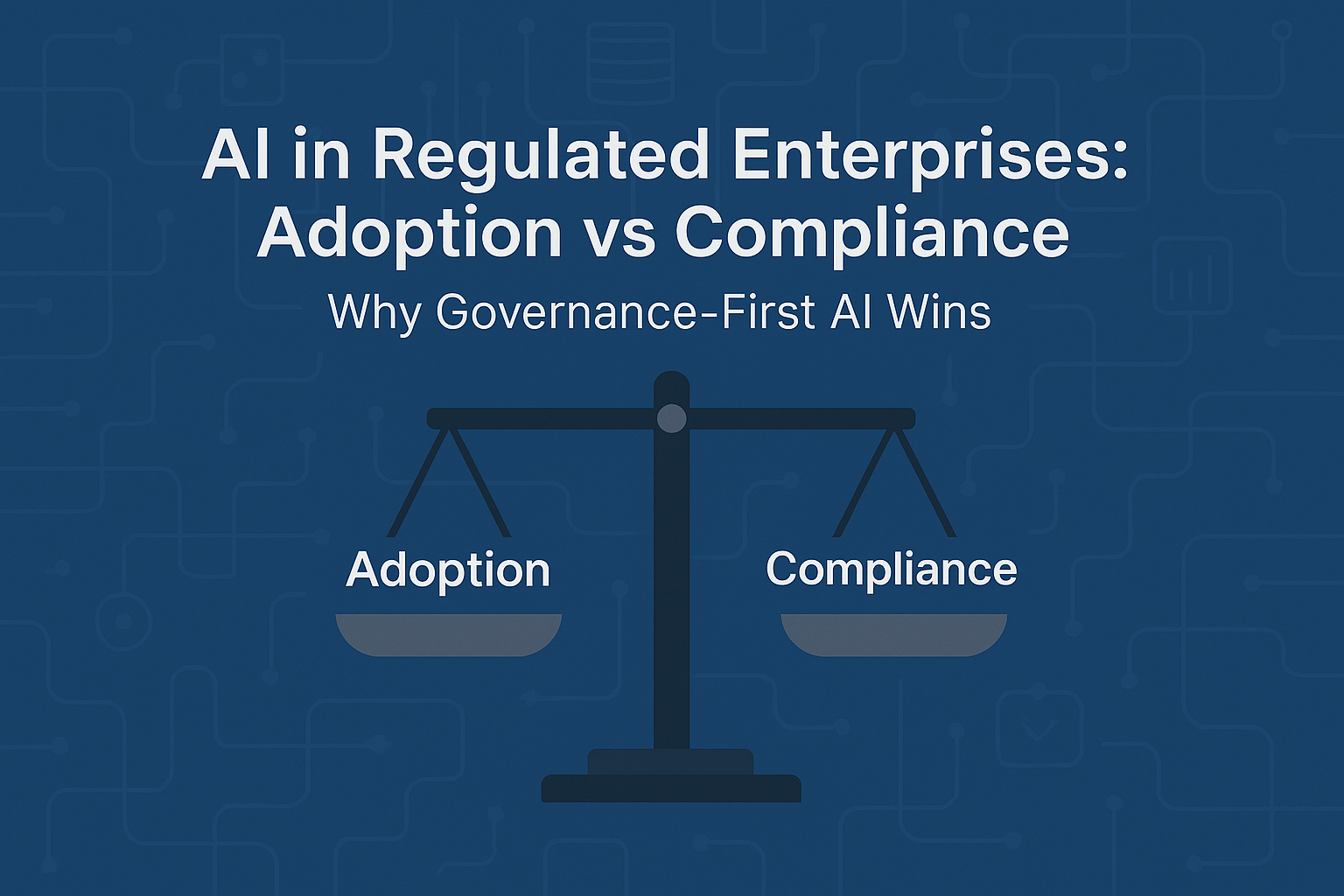
When Speed Meets Scrutiny
Banks, insurers, and asset managers are experimenting with AI copilots to speed up analysis and reporting. But for highly regulated enterprises, the challenge isn’t just whether copilots can answer questions — it’s whether those answers can be trusted, governed, and audited.
Without governance, every AI pilot is a liability. That’s why the next wave of adoption requires a new principle: Governance-First AI.
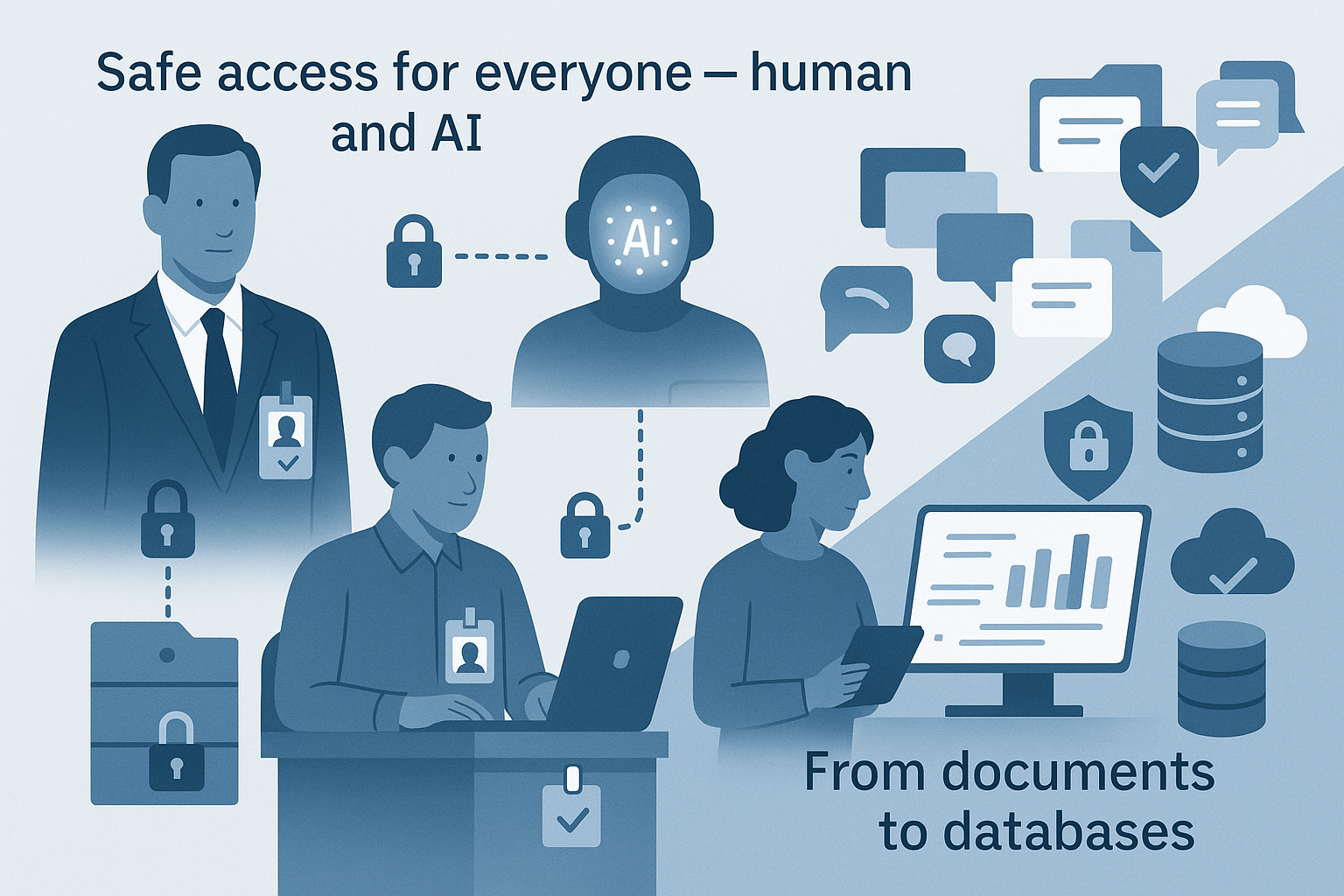
Safe access for everyone — human and AI
We make it possible for anyone in the enterprise to use AI tools safely — whether it’s the CEO asking for financial summaries, the team lead reviewing regional performance, the specialist investigating fraud, or the AI agent automating a workflow. Each gets the access they need, and nothing more.
AI apps and copilots can query at machine speed, far beyond what humans could. But without governance, that scale turns into risk. Governance-First AI extends enterprise trust the same way AI extends human ability — by ensuring every query, no matter how fast or how many, follows policy and leaves an audit trail.
From documents to databases
Today, most copilots are pointed at documents, ticketing systems, and collaboration tools. Useful, but limited. The real value — and the real risk — lies in the that drive financial reporting and forecasting.
That’s where the sensitive data regulators scrutinize is stored. Opening those systems to AI could save teams enormous time — but without governance, it would also create enormous liability.
The TM1 example
One asset manager we spoke with put it plainly: “If I could trust an AI copilot on our TM1 data, it would save my team weeks every quarter. But right now, the compliance risk is too high.”
TM1 is widely used for enterprise planning — holding general ledger structures, cost center budgets, headcount assumptions, and revenue forecasts. These are the exact data sets regulators expect to be tightly controlled under SOX, GDPR, and other frameworks. Giving AI apps or agents direct access without governance would be unthinkable.
Which views should a CFO see? What slice is safe for a team lead? How do you prove to auditors that every AI query followed policy?
This is exactly where Governance-First AI comes in. With LLMac, enterprises can define access policies directly on TM1, enforce them in real time, and log every transaction — whether a field is touched once or a million times. That makes copilots on sensitive systems like TM1 not just possible, but for regulators and compliance officers.
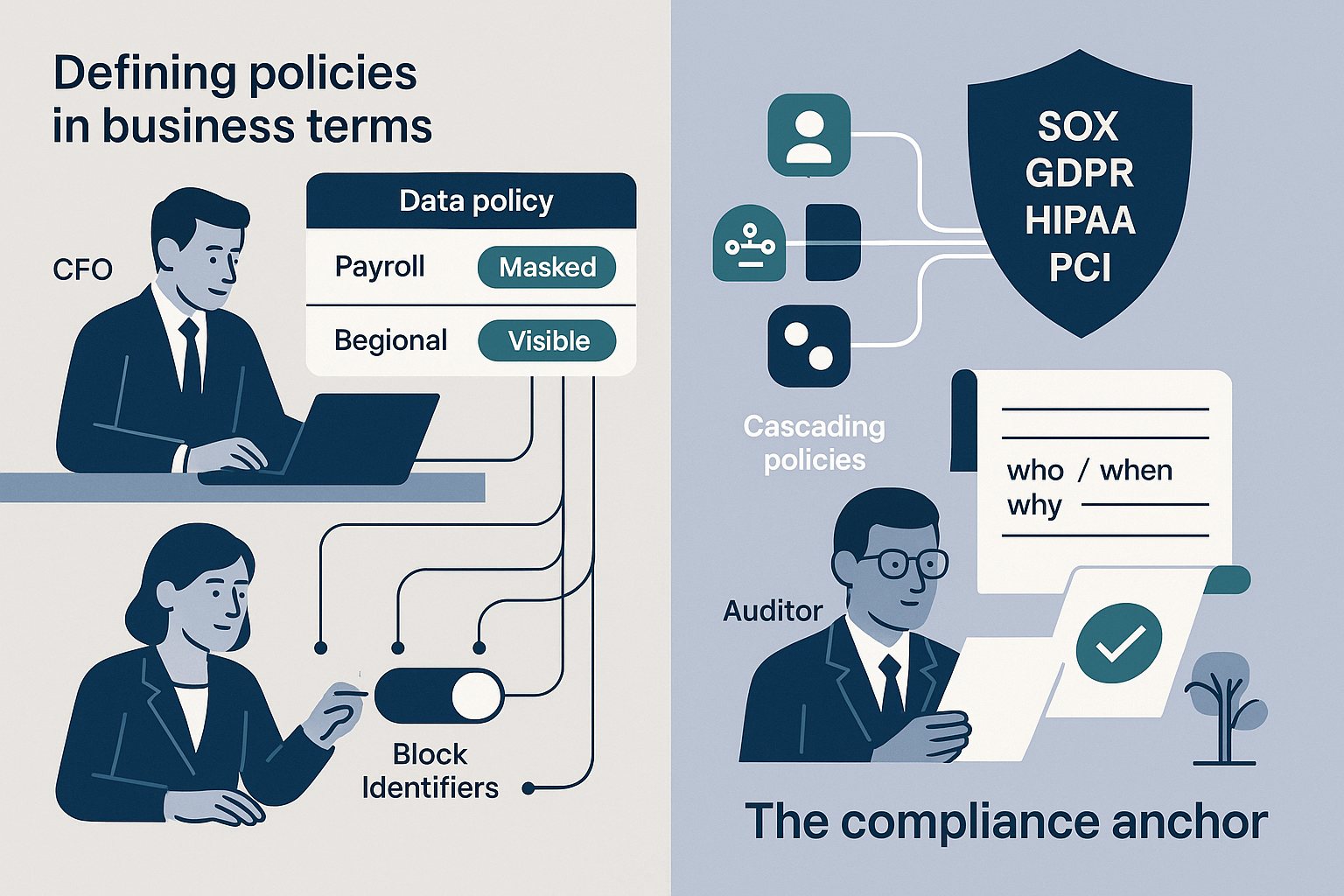
Defining policies in business terms
Traditional IAM and RBAC bury access rules in technical roles and database views. Only specialists can configure or understand them; everyone else is stuck trusting static controls.
LLMac takes a different approach. It lets enterprises define access policies in business terms, directly on the data:
- A CFO can allow regional managers to see expense summaries but mask payroll details.
- A compliance officer can block access to customer identifiers across all copilots.
- A single policy change cascades instantly to every app, agent, and workflow.
This isn’t about buzzwords or bolt-ons. It’s about solving the governance problem at the database — where compliance actually lives.
The compliance anchor
For financial institutions, compliance isn’t optional — it’s the foundation of customer trust. SOX, GDPR, HIPAA, PCI: each requires proof of who accessed what, when, and why.
Auditors don’t care how advanced your AI is. They ask a simple question: Can you show me the evidence?
With LLMac, every query is enforced, logged, and provable. That means copilots and AI apps don’t just accelerate workflows — they stay inside the guardrails regulators demand.
From liability to trust
The lesson is clear: copilots in regulated industries won’t move from pilots to production unless they are governed. Banks, insurers, and asset managers can’t risk AI turning their most sensitive databases into black boxes.
That’s why Governance-First AI must be the foundation of enterprise adoption. At LLMac, we’re building the governance layer that makes this possible — turning AI adoption from a compliance risk into a competitive advantage.